WSA vs WSL: What's the Difference?
Same Family, Different Guest
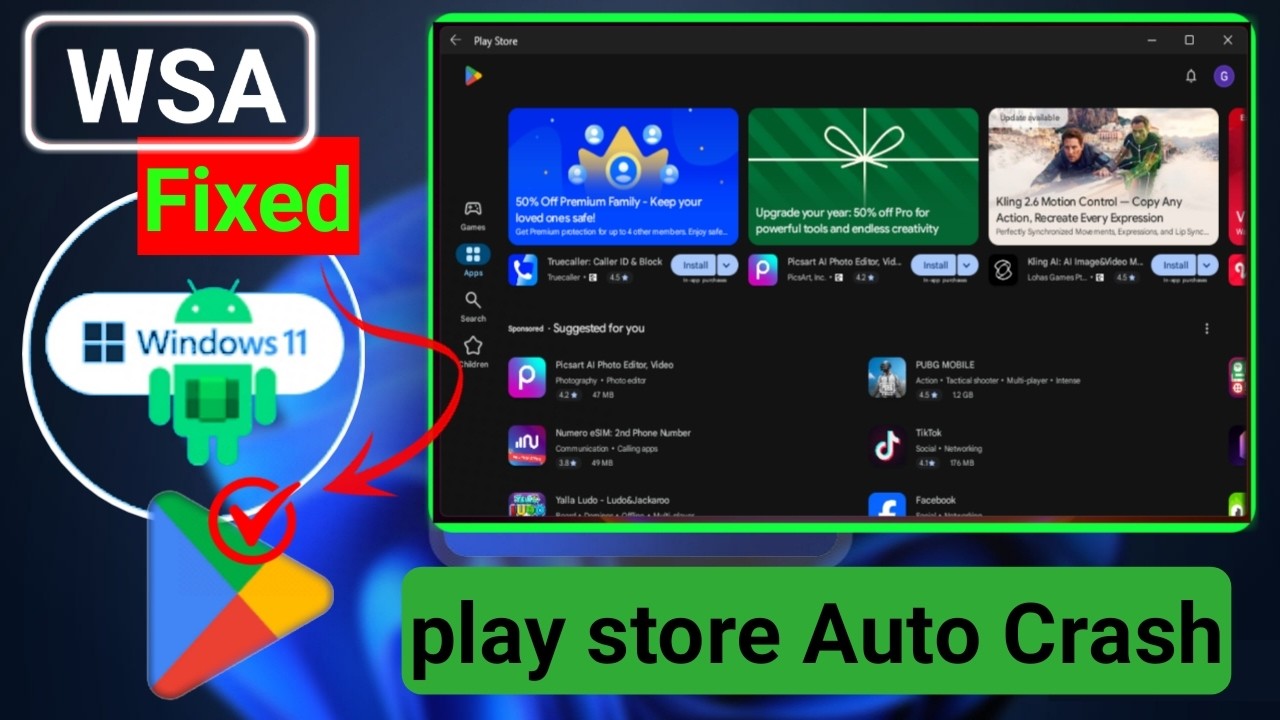
WSL runs Linux userlands; WSA runs an Android (AOSP) userland. Both rely on a Hyper-V-backed VM and the same kernel technology, but the workloads are completely different: command-line and servers vs touch-first mobile apps.
Side-by-Side
- Guest OS: WSL = Linux distros (Ubuntu, Debian…) · WSA = Android 13 (AOSP)
- Primary use: WSL = dev/CLI/servers · WSA = mobile apps & games
- Windowing: WSLg remotes X11/Wayland · WSA remotes Android activities
- App source: WSL = package managers · WSA = APK / Appstore / Play Store
- Translation: WSL = none needed · WSA = libhoudini/libndk for ARM
Do They Conflict?
No. WSA actually depends on the Virtual Machine Platform that WSL also uses. Enabling one makes enabling the other easier. WSA Installer automatically enables VirtualMachinePlatform and Hyper-V prerequisites for you.
Which Should You Learn?
If you write code, learn WSL. If you want to run Android apps on your PC, you want WSA. Many developers run both: Linux tooling in WSL, Android testing in WSA.
Related Posts
What Is Windows Subsystem for Android (WSA)?
A plain-language introduction to WSA: what it is, why Microsoft built it, and how it lets you run Android apps on Windows 11.
WSA System Requirements, Explained
CPU virtualization, RAM, the Virtual Machine Platform, and why Administrator rights matter — a deep dive into what WSA really needs.
How Windows Subsystem for Android Actually Works
A technical walkthrough of the WSA stack: the AOSP runtime, the libhoudini/llvmpipe translation layer, init, and how Android apps become Windows windows.