How Windows Subsystem for Android Actually Works
The Big Picture
WSA is not an emulator in the traditional sense. It is a lightweight virtual machine based on the same Hyper-V-backed plumbing as WSL2, running a trimmed AOSP image. Android apps execute as real Linux processes inside that VM, and their windows are remoted to the Windows desktop.
The Core Components
- A small Linux kernel (derived from WSL2's) booting the AOSP userland
- Android Runtime (ART) executing Dalvik/ART bytecode
- libhoudini / libndk_translation for ARM-on-x86 and x86-on-ARM translation
- A 'VirtWifi' bridged network interface to your host connection
- The Windows-side broker that turns Android windows into native windows
Instruction Translation
Most Android apps are built for ARM. On an x86 PC, WSA uses libhoudini (for ARMv7) and libndk_translation (for ARM64 native libraries) to translate instructions at runtime. On ARM Windows devices (like Snapdragon PCs), the reverse path handles x86 apps. This is why some heavy 3D games misbehave — translation has a cost.
Graphics and the Render Pipeline
WSA renders via ANGLE on top of your host GPU (Direct3D). When GPU acceleration is unavailable it falls back to llvmpipe software rendering — functional but slow. The graphics stack is the most common source of 'black screen' and 'laggy UI' complaints.
How an App Becomes a Window
When you launch an Android app, the subsystem starts its activity, and the Windows broker creates a native window that mirrors the app's surface. Clipboard, file picks, and notifications are bridged through the Windows App SDK so the experience feels local. This is nearly identical in spirit to how WSLg remotes Linux GUI apps via RDP.
Where WSA Installer Fits
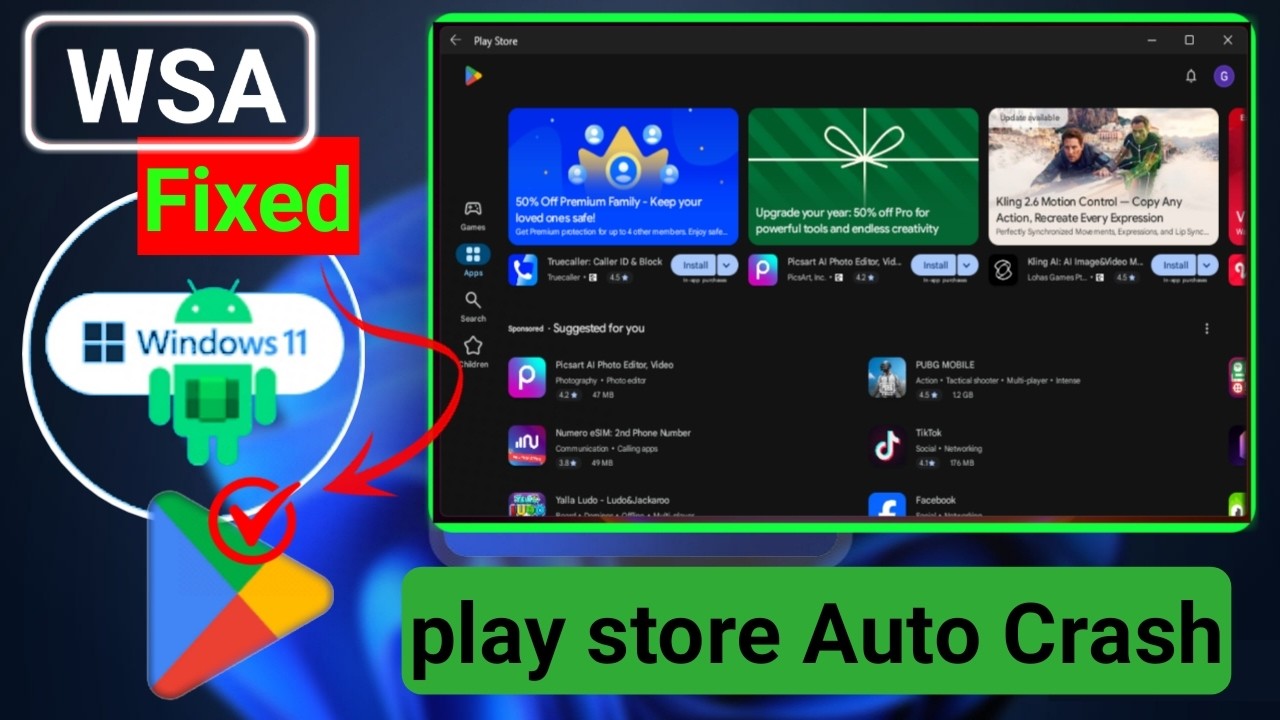
Microsoft's official path only delivered Amazon Appstore apps. WSA Installer extends the platform by patching Google Play Services and the Play Store onto the subsystem, enabling the full Android app catalog — all while keeping the same underlying architecture described here.
Related Posts
What Is Windows Subsystem for Android (WSA)?
A plain-language introduction to WSA: what it is, why Microsoft built it, and how it lets you run Android apps on Windows 11.
WSA vs WSL: What's the Difference?
Both are 'Windows Subsystem for…' projects, but they serve very different runtimes. Here's how WSA and WSL compare.
WSA System Requirements, Explained
CPU virtualization, RAM, the Virtual Machine Platform, and why Administrator rights matter — a deep dive into what WSA really needs.