Inside WSA Installer: The 6 Automated Phases
Inside WSA Installer — Part 1 of 1
- Inside WSA Installer: The 6 Automated Phases (you are here)
Why a Tool at All?
Installing WSA correctly means enabling Windows features, downloading the right build, extracting a 7z archive, patching binaries, registering the subsystem, and integrating Play Store. WSA Installer automates every step through a 5-step frameless wizard.
Phase 1 — Smart System Scan
The installer detects VT-x, Hyper-V, VirtualMachinePlatform, HypervisorPlatform, and WSL using five methods (CPUID, wmic, systeminfo, PowerShell, registry). If anything is missing it offers to enable it automatically with admin rights.
Phase 2 — Auto Configuration
Required Windows features are turned on via DISM and the system may prompt for a restart. No BIOS hunting, no manual feature dialogs.
Phase 3 — Parallel Chunked Download
The WSA archive is fetched in 30 parallel chunks with resume support, live speed, and ETA. The same engine powers the self-update system.
Phase 4 — Extract & Patch
The 7z archive is extracted with tar.exe, WsaClient.exe is binary-patched for Windows 10 (WSAPatch), and the package is verified against filelist.txt before registration.
Phase 5 — Play Store Patching
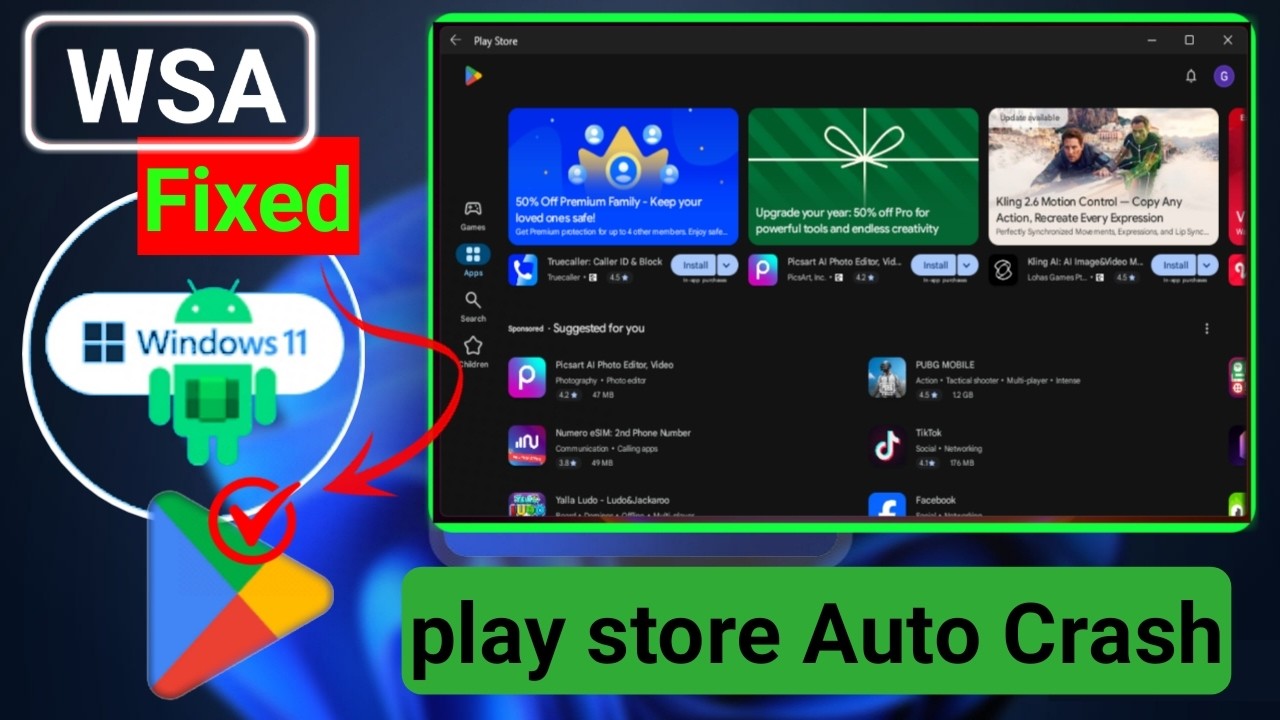
MindTheGapps 13.0 is merged via MagiskOnWSALocal. ADB authorization is automated through pywinauto GUI scripting, so Play Store appears in the Start Menu without manual commands.
Phase 6 — Complete & Background Service
Shortcuts are created, WSABackgroundService is registered as a Windows service, and the subsystem launches. The background service keeps ADB and file shares alive and auto-restarts on failure.
Related Posts
Building WSA Installer: Python, Rust & Flet
A behind-the-scenes look at how WSA Installer is built — the Flet GUI, the Rust security gateway, and the NSIS packaging pipeline.
WSA Pacman: Double-Click Any APK to Install into WSA
How WSA Pacman turns Windows Explorer into an Android app installer — just double-click any APK, XAPK, or APKS file.
How Windows Subsystem for Android Actually Works
A technical walkthrough of the WSA stack: the AOSP runtime, the libhoudini/llvmpipe translation layer, init, and how Android apps become Windows windows.